



Analytics. Why Your Growth Metrics Don't Match (And How to Move Forward)

Original title: Sometimes the numbers won’t match, and that's okay: fixing measurement paralysis in app growth
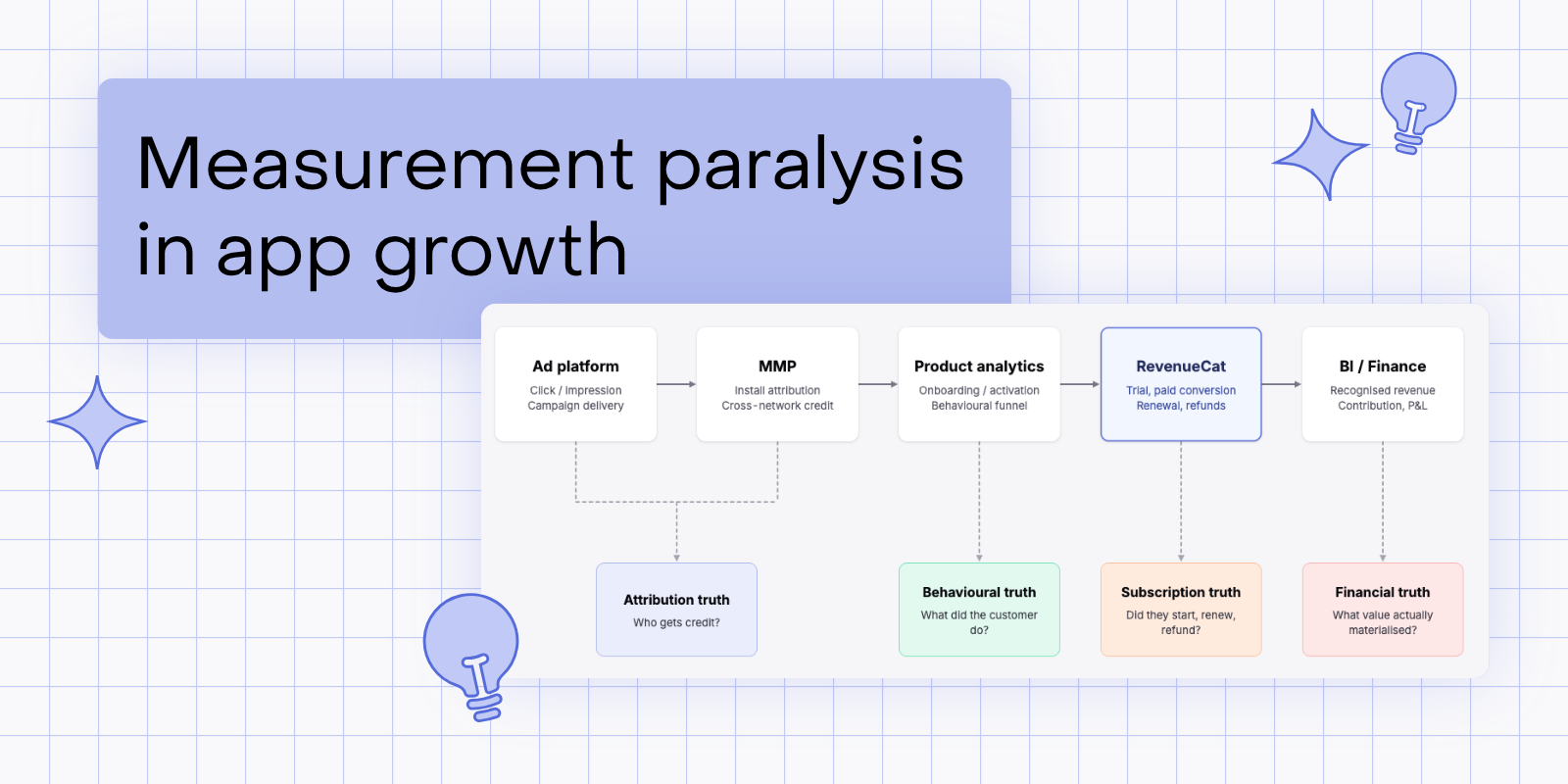
App growth teams frequently encounter a frustrating reality: the same metric produces different numbers depending on who measures it. Paid acquisition reports a customer acquisition cost of $42, while finance calculates $67. Meta's dashboard shows one campaign vastly outperforming others, yet the mobile measurement partner paints a much less optimistic picture. Product celebrates an 18% improvement in trial starts, but revenue data reveals trial-to-paid conversion is actually declining. These discrepancies stem from legitimate differences in attribution windows, data sources, and calculation methodologies across platforms and teams. Rather than treating this as a problem to be "solved" through endless dashboard reconciliation, successful growth teams recognize that measurement paralysis (the inability to act because numbers don't perfectly align) is the real obstacle to progress.
The key insight for mobile studios is that perfect measurement alignment is often impossible and pursuing it wastes resources better spent on experimentation and iteration. Instead of convening meetings to determine which number is "correct," teams should establish clear conventions about which metric owns each decision, accept reasonable variance as normal, and focus on directional trends rather than absolute precision. This pragmatic approach doesn't mean ignoring data quality, but rather acknowledging that multiple valid perspectives on the same phenomenon can coexist. By setting measurement standards upfront, documenting assumptions, and building trust across functions, studios can move from paralysis to velocity, making faster decisions with imperfect but directionally sound data.